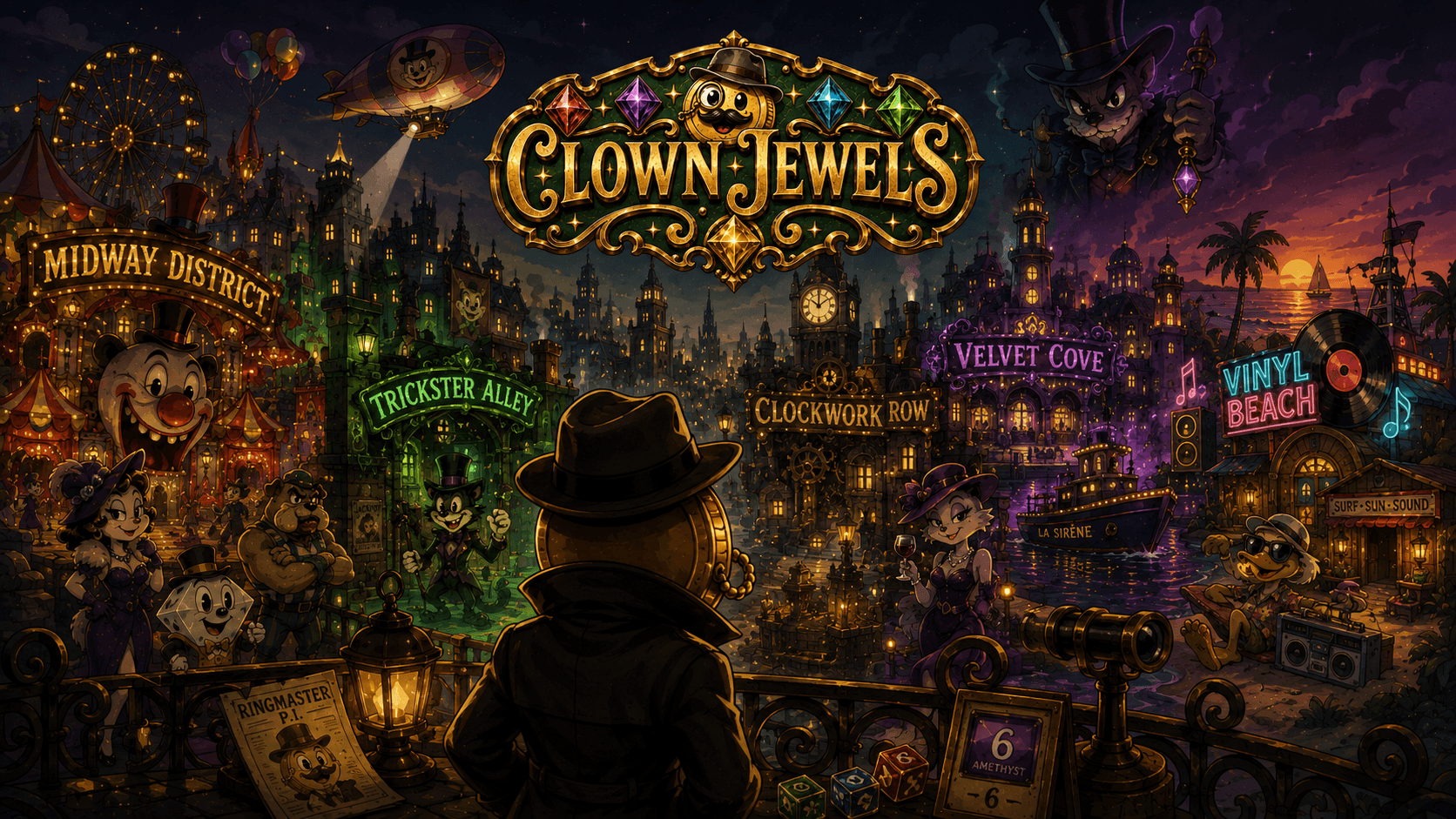
ClownJewels
An original asynchronous puzzle strategy game exploring progression, worldbuilding, and compounding game systems.
ClownJewels began as a personal experiment in rapid game design — within six days, a puzzle prototype grew into a noir-inspired world built around compounding mechanics, progression systems, and original music.
The Beginning
I didn't set out to build an entire game universe.
After years designing products for millions of players, I wanted a place where I could experiment without constraints. Somewhere I could prototype mechanics quickly, follow interesting ideas wherever they led, and own every design decision from the first sketch to the final interaction.
ClownJewels started as that experiment.
Within six days I had designed the core mechanics, built a playable prototype, established the visual direction, and proved to myself that the foundation was worth continuing.
I thought I was building a puzzle game.
Instead, I accidentally started building a world.
Designing the Core Loop
Every game eventually teaches you what it's actually about.
For ClownJewels, that became compounding decisions.
The rules are intentionally small.
Players place jewel dice onto a shared board where duplicates strengthen one another, competing matches cancel out, and completed straights become long-term strategic objectives.
Nothing is particularly complicated on its own.
The depth comes from how these mechanics begin interacting with one another over time.
That philosophy has guided almost every decision since.
From Puzzle Game to Living World
The biggest turning point wasn't mechanical.
It was creative.
The original version had a much simpler circus theme.
As the game evolved, I realized the mechanics deserved a world with more personality and internal consistency.
The project slowly transformed into a noir-inspired detective universe filled with forgotten vaults, jewel crime families, living objects, carnival performers, mysterious rivals, and districts that each tell their own story.
Instead of levels, I started thinking in neighborhoods.
Instead of bosses, I started designing rival personalities.
Instead of unlocks, I started designing discoveries.
Every District Has a Purpose
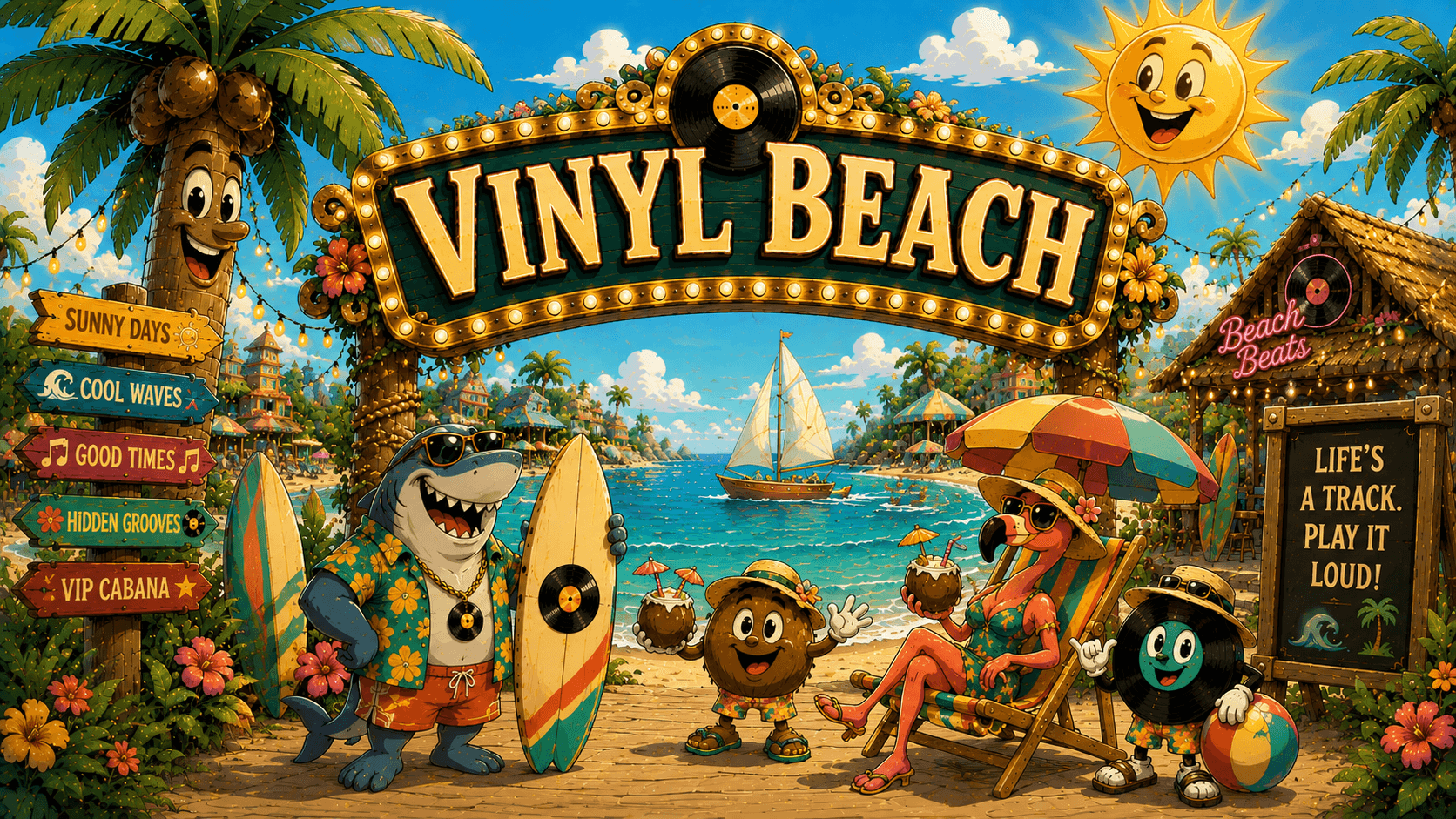
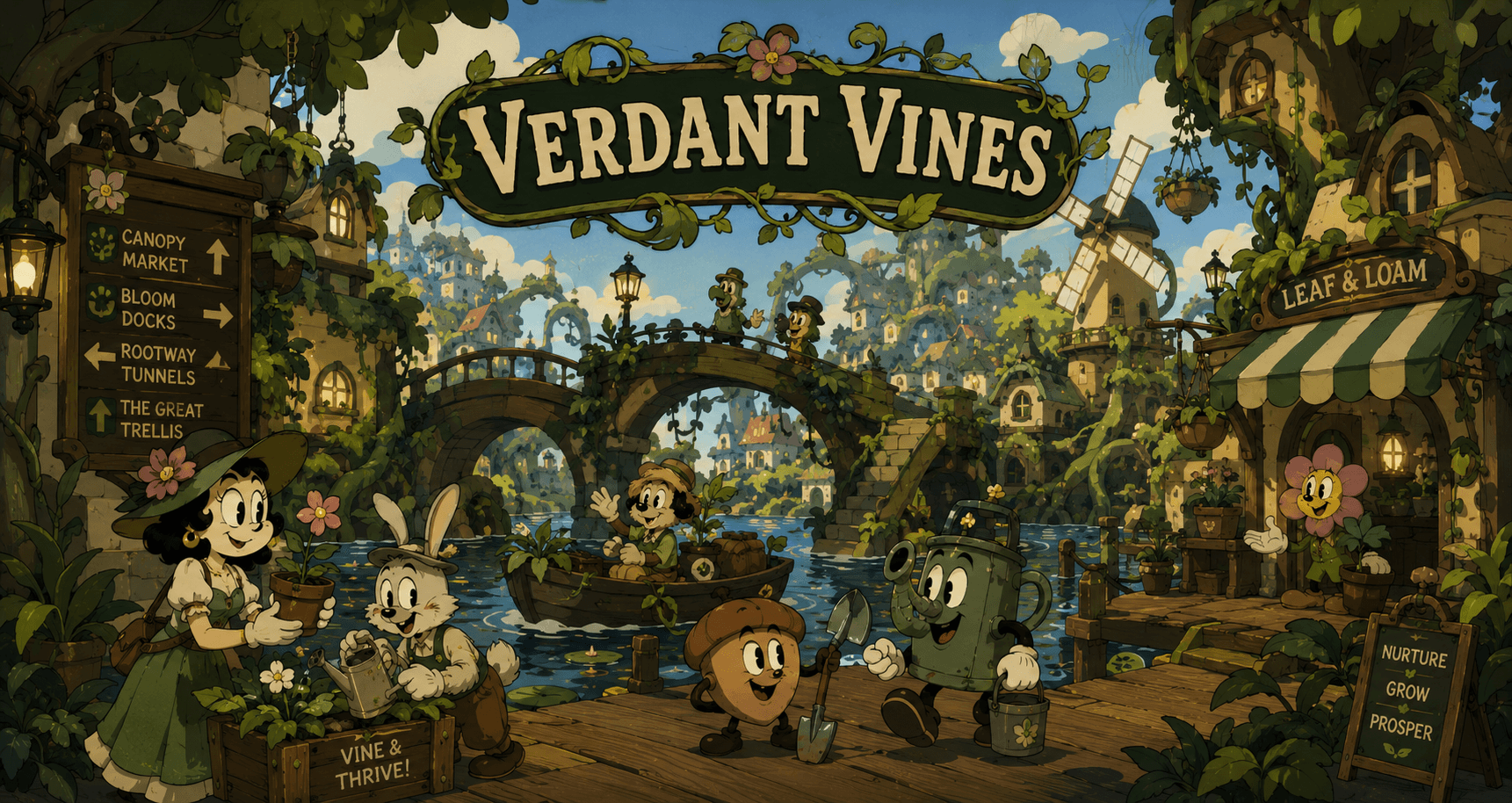
Each district introduces something new.
Not just visually, but mechanically.
Every world includes its own:
- Relic
- Rival
- Companion unlock
- Original soundtrack
- Environmental storytelling
- Gameplay identity
The goal isn't simply adding content.
Every new district should deepen the player's understanding of systems they've already learned.
Building Systems That Reinforce One Another
One idea keeps showing up throughout my work.
Independent systems become more valuable when they reinforce one another instead of competing for attention.
ClownJewels became my playground for exploring that philosophy.
Progression isn't one mechanic.
It's dozens of connected systems.
Players eventually unlock relic loadouts, companion abilities, powers, world progression, collections, asynchronous duels, survival runs, daily challenges, and seasonal content.
None of these replace the core game.
Each one creates another interesting decision.
Beyond the Match
One of the most interesting parts of ClownJewels isn't actually the puzzle game.
It's everything surrounding it.
Years building onboarding, progression, LiveOps, retention systems, referral loops, and social experiences inevitably influenced how I approached the project.
One example is the invite system.
Instead of treating invitations as marketing, I wanted them to feel like part of progression itself. Inviting friends wasn't designed as an interruption. It became another meaningful step in discovering the larger world.
The long-term vision extends well beyond individual matches through asynchronous competition, evolving districts, seasonal updates, expanding collections, and social progression.
Composing the World
One unexpected part of the project has been writing original music for every district.
Rather than treating audio as something added near the end of development, the soundtrack became another design tool.
Each district has its own mood, tempo, instrumentation, and identity.
Together, the music helps make every part of the world feel distinct while still belonging to the same universe.
Eventually I'd like to release the soundtrack alongside the game itself.
Why This Project Matters to Me
ClownJewels has become much more than an independent game.
It's where product design, game design, systems thinking, worldbuilding, visual direction, music, and rapid prototyping all come together.
Every new mechanic teaches me something.
Every new district becomes another opportunity to experiment.
It's the project I return to whenever I want to explore an idea that doesn't fit anywhere else.
Status
ClownJewels is actively in development.
After recently migrating the project from Replit to Cursor, it now has a much stronger long-term foundation for continued development. New districts, original music, progression systems, companions, and competitive features are all actively evolving as the game grows.