Designing Dreamwave
Building the identity of an ensemble.
Dreamwave wasn't just an improv team. It became an exercise in designing the identity of a creative project, from its visual language and documentation to its community, performances, and public presence.
More Than A Show
Dreamwave began as an experiment in long-form improvisation, but it quickly became something larger.
I wasn't only interested in developing a new form. I wanted to understand what it meant to build the identity of a creative project.
Everything surrounding the performances became part of that exploration. The visual language, the posters, the photography, the rehearsals, the documentation, the Instagram feed, the booking process, and even the way the ensemble presented itself all became opportunities to reinforce the same underlying philosophy.
The goal was never to market a comedy show.
It was to create something that felt like a world people wanted to step into.
Designing For The Ensemble
Dreamwave grew from a simple observation.
Much of the improv I encountered felt centered around individuals. Teams certainly existed, but many performers were understandably building their own identities, performing with multiple groups, and developing their own voices across the community.
Dreamwave asked something different.
The form only works when the ensemble becomes more important than any individual performer. Some scenes ask you to carry emotional weight. Others ask you to quietly support someone else's idea. Sometimes the most important contribution is becoming the environment itself.
That philosophy extended beyond the stage.
I didn't want the identity of Dreamwave to revolve around personalities.
I wanted the identity to belong to the ensemble.
Building A Visual Language
Most improv branding leans into comedy.
Bright colors.
Funny cast photos.
Playful illustrations.
Inside jokes.
That approach makes perfect sense for many teams, but it didn't reflect what Dreamwave was trying to become.
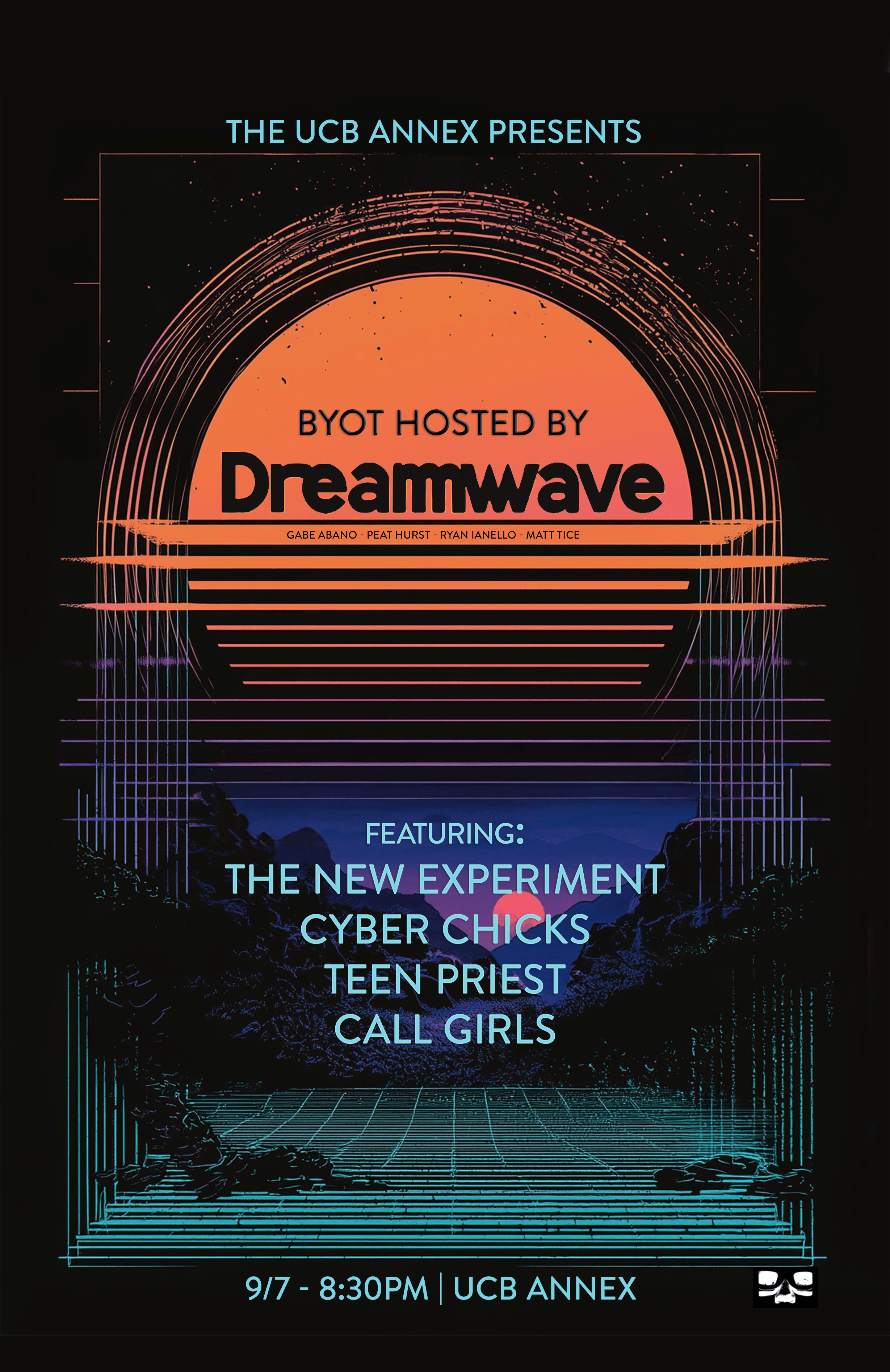
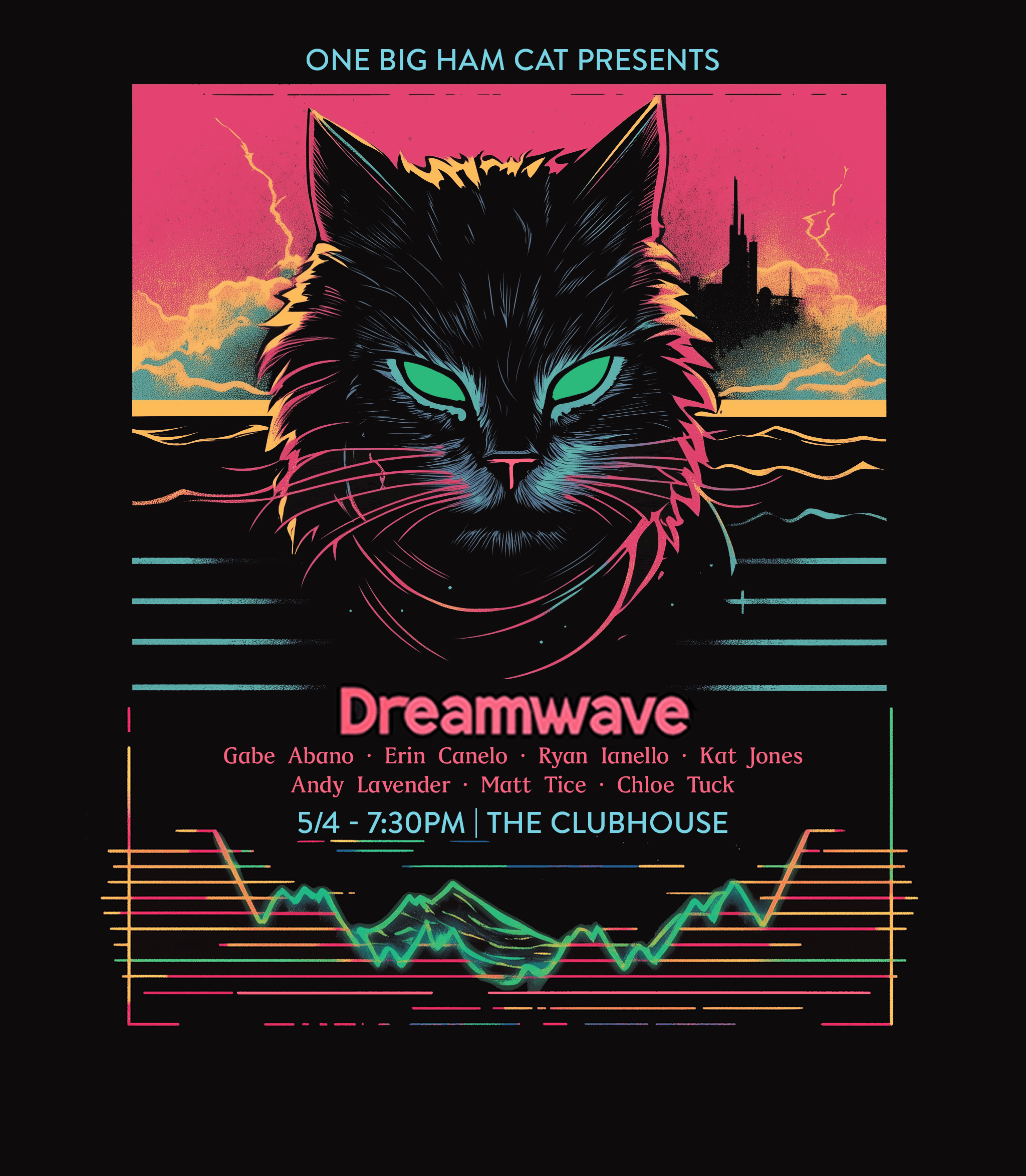
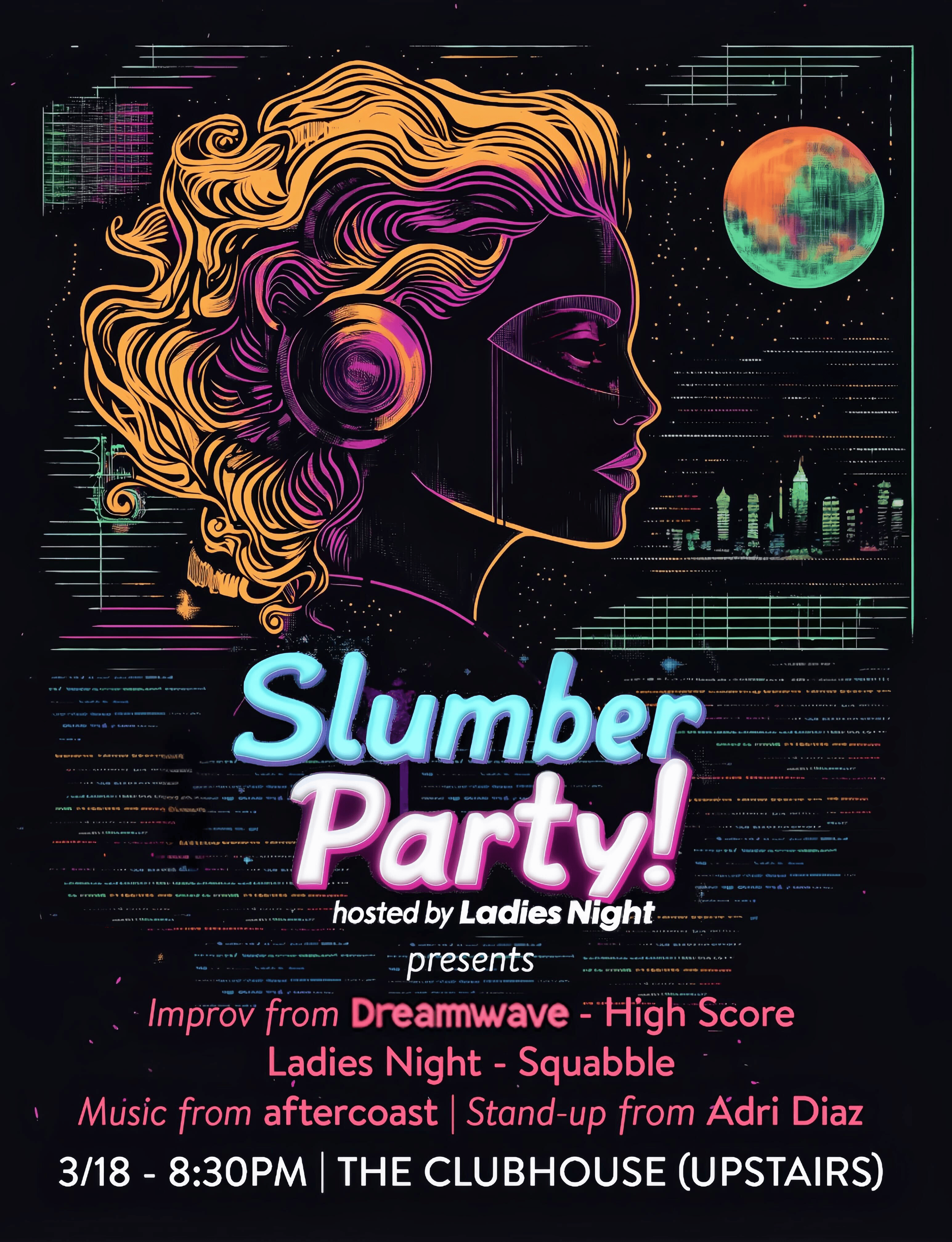
Instead I developed a visual language inspired by science fiction, vaporwave, synthwave, architecture, landscapes, editorial design, surrealism, and retro futurism. Every show received original artwork while still feeling like it belonged to the same creative system.
Over time people began recognizing Dreamwave posters before they read the title.
That consistency mattered.
The artwork wasn't trying to make performers recognizable.
It was trying to make the project recognizable.
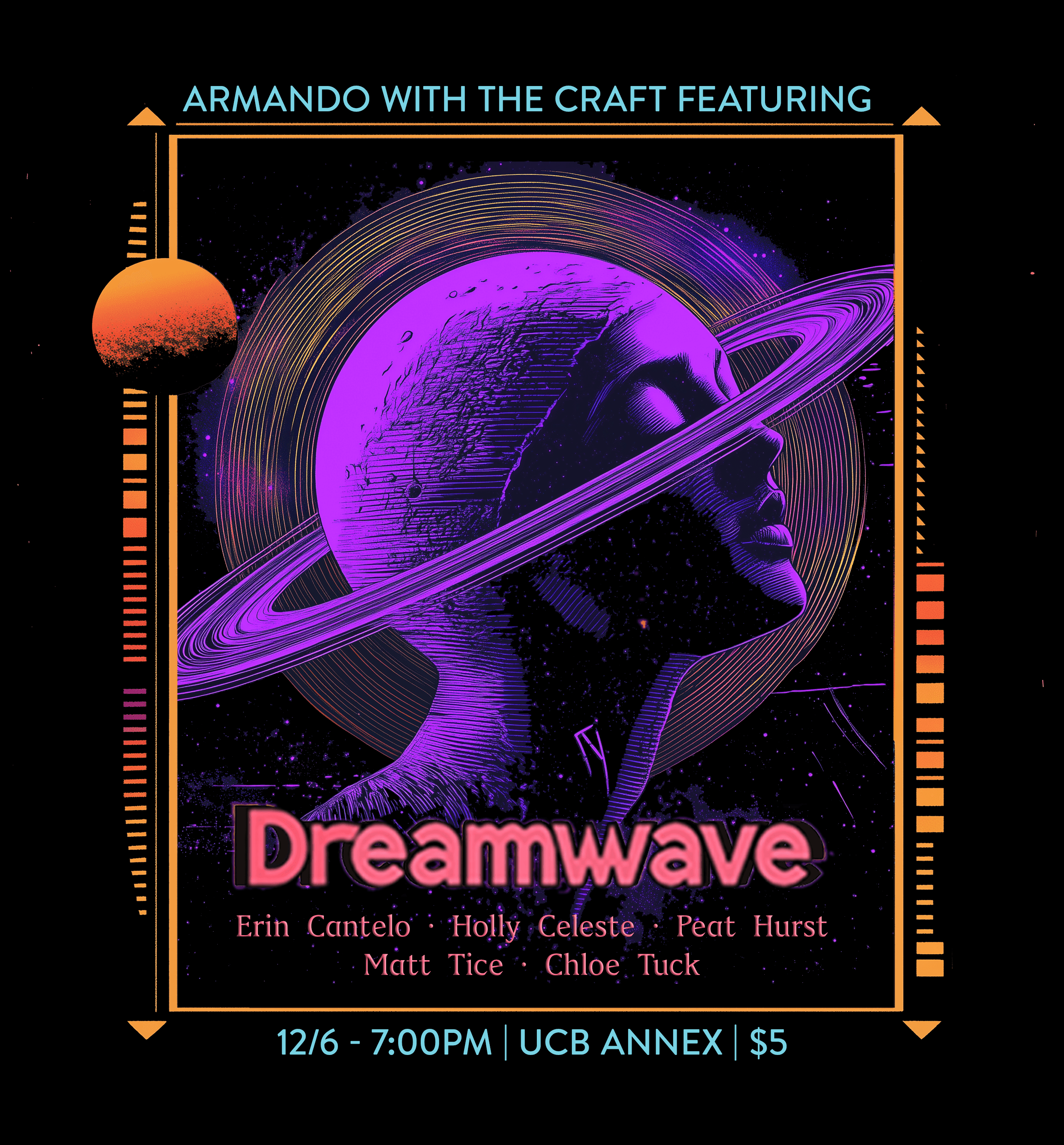
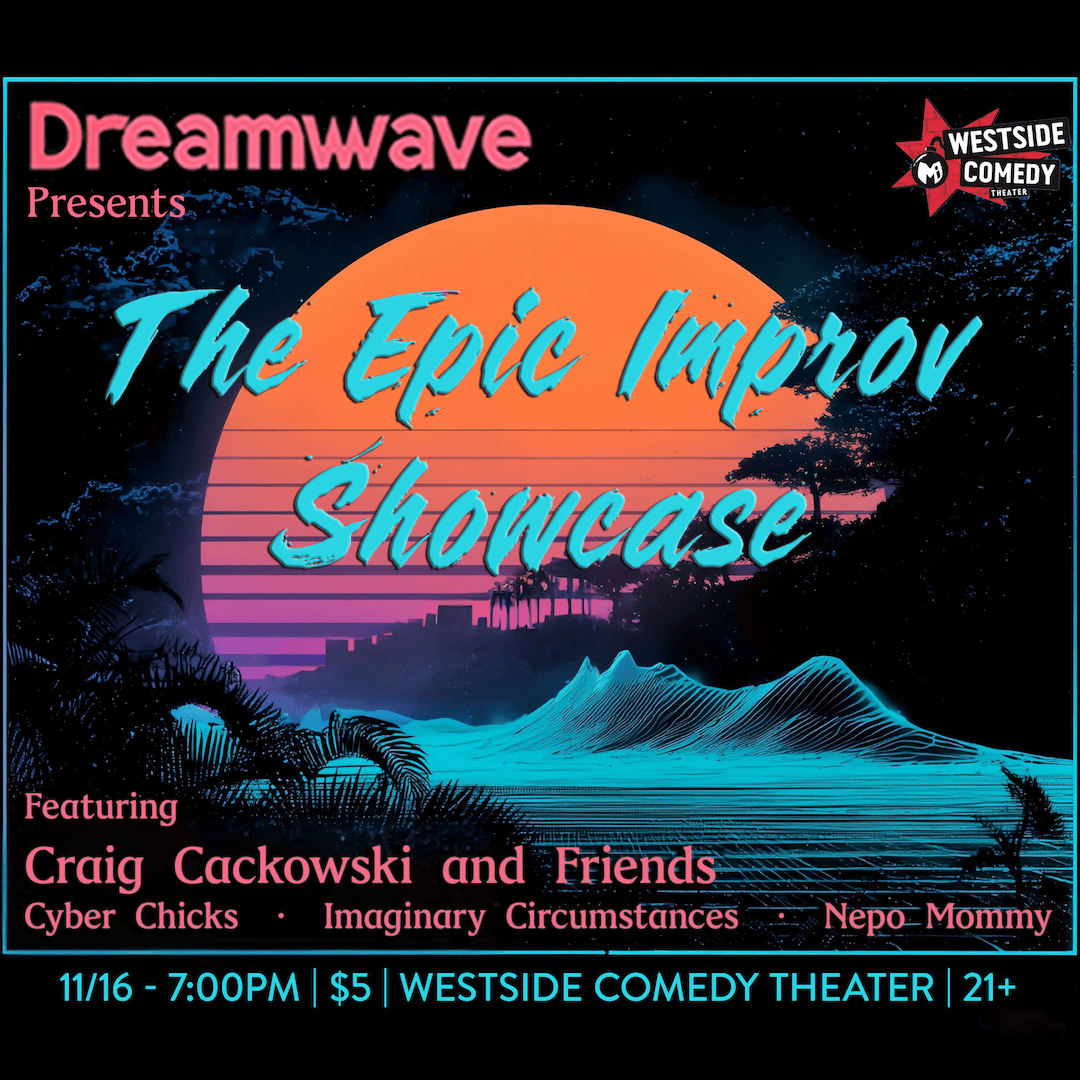
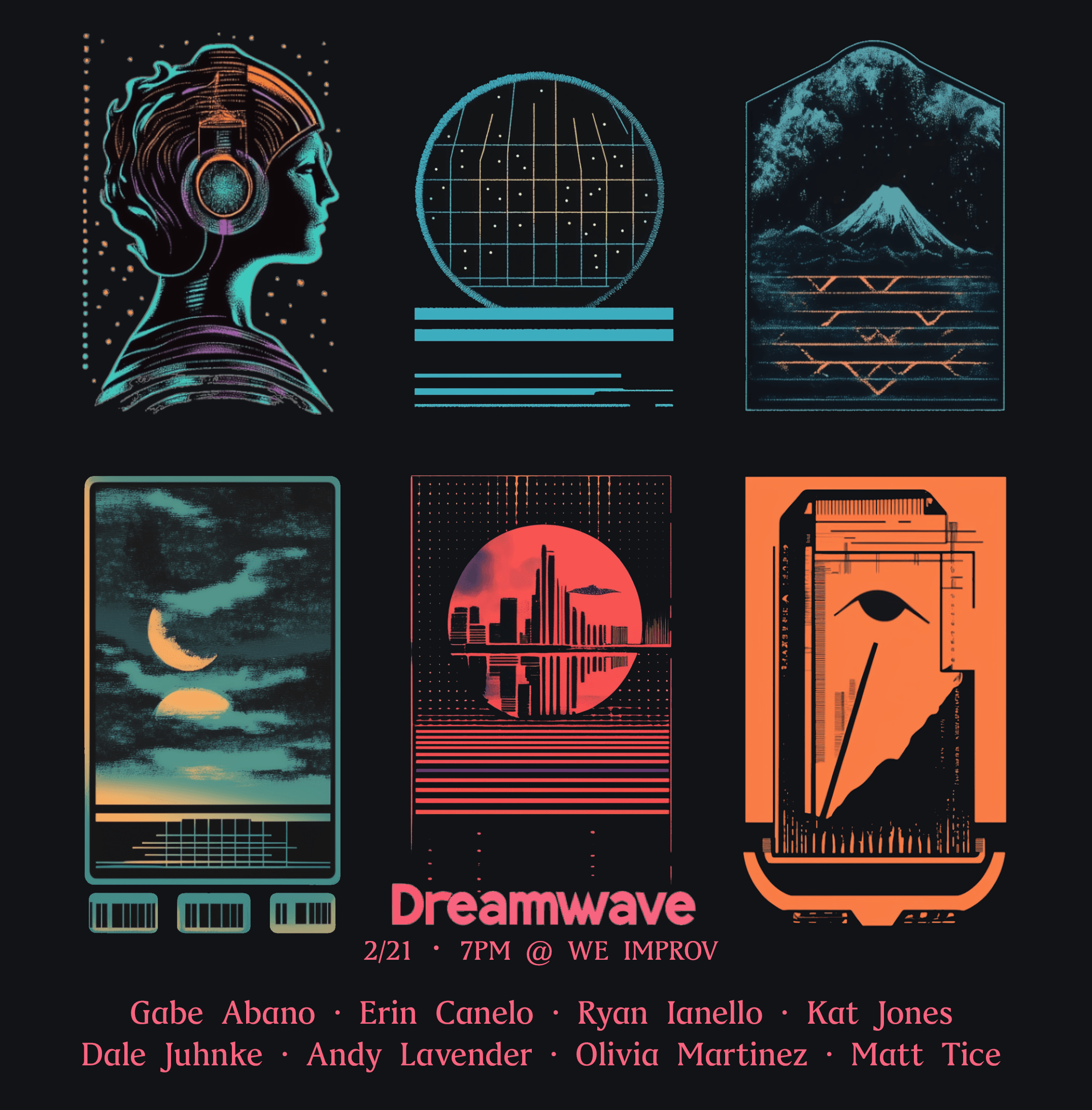
Posters As Digital Mixed Media
People occasionally ask whether the posters are AI generated.
They're not.
They're digital mixed media.
Every poster combines multiple techniques including graphic design, typography, compositing, photography, illustration, digital painting, masking, color grading, AI-assisted image generation, and extensive editing across different tools.
AI became one tool within a much larger creative process.
The work wasn't about generating images quickly.
It was about developing an artistic language that felt unmistakably like Dreamwave.
Looking back through the archive, I can see the artwork evolving alongside the ensemble itself. New influences appeared. Different compositions emerged. The visual language became more refined over time without losing its identity.
Documenting The Practice
One of the things I became most proud of wasn't the posters.
It was the archive.
Every rehearsal is recorded.
Every performance is filmed.
After each show I review the footage, capture moments that feel representative of something we discovered, and add them back into the ongoing history of the project.
Rehearsals and performances each developed their own visual treatment so people could immediately distinguish between the work itself and the work behind the work.
The goal wasn't simply to post consistently.
It was to document an evolving creative practice.
Years later, scrolling through the archive feels less like looking at social media and more like reading a visual journal.
Preserving Moments
One of my favorite recurring rituals became capturing still frames from performances.
Rather than explaining the jokes, I paired each image with a short phrase pulled from the scene.
"A bicycler's guide to time."
"Affirmation triangle."
"Graceful escape."
The captions were intentionally incomplete.
They weren't trying to recreate the experience of watching improv.
They simply preserved small fragments of moments that could only have existed because of that particular audience, cast, and performance.
Those fragments became another way of documenting the life of the ensemble.
Producing The Project
Designing the identity was only one part of building Dreamwave.
Producing the project meant finding rehearsal space, organizing a rotating ensemble, booking shows across Los Angeles, maintaining relationships with theaters, documenting performances, running the social presence, coordinating rehearsals, creating artwork, and continually finding opportunities for the team to perform.
None of those responsibilities existed independently.
They all reinforced one another.
The stronger the identity became, the easier it became to book shows.
The more performances we produced, the richer the archive became.
The richer the archive became, the easier it was for new performers and audiences to understand what Dreamwave was.
The project gradually became self-reinforcing.
Looking Back
When I look through the Dreamwave archive today, I don't primarily see posters or social media.
I see the gradual construction of an identity.
The performances mattered, but so did everything surrounding them. The artwork invited curiosity. The documentation preserved discoveries. The photography revealed the rehearsal process. The archive recorded the evolution of the ensemble itself.
None of those pieces would have meant much on their own.
Together they created a world that felt larger than any individual performance.
Looking back, I think that's what I was really building all along.